Understand transitional housing first. Then decide.
Nine guides written for someone sitting in Hong Kong who has never bought a house in Britain, and has never heard of UK transitional housing. No jargon, no sales language, and the risks in the same detail as the returns.
Everything you would want to ask before the first call.
Tap any question to open it. Nothing here is personal advice — it is background, so that when you do speak to a solicitor or accountant you already know what to ask.
Yes — completely, and without a permit. The United Kingdom places no restriction on foreign nationals buying residential property. There is no approval regime, no additional-buyer permission to obtain, and no requirement to be resident, to hold a visa, or to have ever visited the country.
What you actually own
Almost every house we offer is freehold. Freehold in England and Wales means outright, perpetual ownership of the land and the building on it. There is no expiry, no ground rent to a landlord, no land premium to renew, and no reversion to the state. That is the significant difference from Hong Kong, where almost all land is held on government leases with a fixed expiry.
Ownership is recorded at HM Land Registry, a government register with a state guarantee of title. Your name — or your company's name — appears on it. You can inspect the entry online for a few pounds.
What protects you
- English property law, which is old, heavily litigated and consequently very predictable.
- A compulsory, regulated conveyancing process. Your solicitor acts only for you.
- Client money protection — your purchase funds sit in a regulated client account, not with the seller.
- The land register itself, which is conclusive as to ownership and indemnified by the state if it is wrong.
The practical consequence: the thing you are relying on is not a relationship or a promise. It is a registered legal title in a jurisdiction where that title is very hard to disturb.
This is the part that is unfamiliar to most Hong Kong investors, and it is the part worth spending ten minutes on, because it is the whole basis of the income.
The statutory duty
Under English housing law, local councils carry a legal duty to secure accommodation for certain households who are homeless or threatened with homelessness — families with children, people fleeing domestic abuse, those leaving care, and others in priority need. This is not discretionary spending that gets cut in a bad year. It is an obligation enforceable in court.
Councils do not own enough housing stock to discharge that duty. Britain sold off much of its council housing from the 1980s onward and has built far less than it needs since. So councils lease homes from the private sector, and pay for them through established, long-standing welfare routes.
Why that matters to an overseas investor
In an ordinary buy-to-let, your income depends on one household's ability and willingness to pay each month, and on your agent finding a replacement quickly when they leave. Here, the counterparty behaviour is different: the underlying need is created by statute, the funding route is public, and the tenant-finding is done by an operator placing roughly eighty households a week across its portfolio.
What this does not mean
It does not mean the income is guaranteed by the government. It is not. Funding rules can change, eligibility rules can change, a council's demand in one town can fall, and the operator can underperform. The demand being structural makes the income more durable than a single private tenancy. It does not make it certain. See guide 09.
Because London and the North East are two entirely different investments, and only one of them produces income.
The arithmetic
A modest flat in outer London costs several times the price of these houses and, after service charge, ground rent, management, voids and maintenance, typically produces a low single-digit net return. Investors accept that because they are buying the prospect of capital appreciation and the safety of a deep, liquid, internationally recognised market.
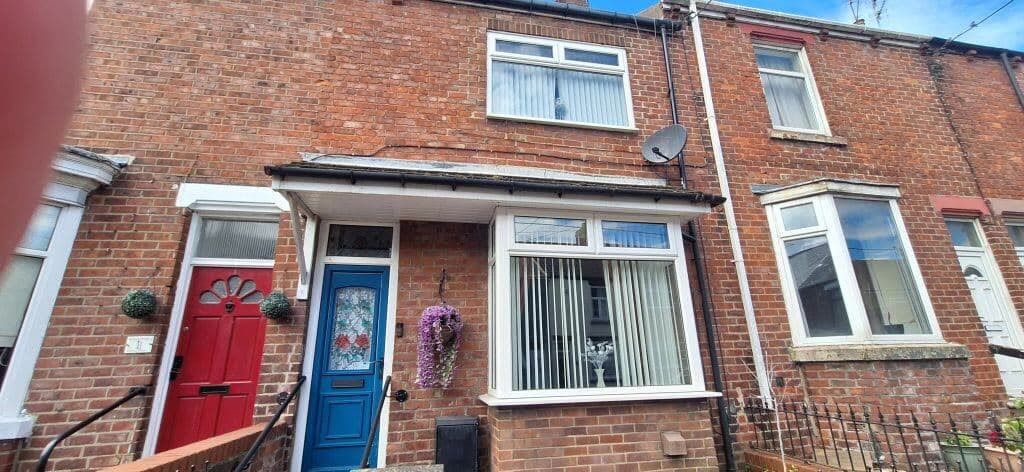
A three-bedroom house in County Durham costs £176,040. That is less than many parking spaces in Hong Kong. The rent it commands is not proportionally smaller — which is precisely why the yield is high and the capital growth story is modest.
Be clear about what you are buying
We would rather say this plainly than let it be discovered later: this is an income investment, not a growth investment. If your objective is sterling capital appreciation and prestige, buy in London or the South East and accept a 3–4% running return. If your objective is monthly cashflow from a tangible asset, the North East is where the arithmetic works.
What about capital value?
These houses are ordinary homes on ordinary streets. Their value moves with the regional market, which has been steadier and less spectacular than London in both directions. They may appreciate; they may not. Nothing in the model depends on them doing so, and no part of the target return assumes it.
Five taxes matter. All of them are published and calculable in advance. None of what follows is tax advice — take your own, in both the UK and your country of residence, before you commit.
1 · Stamp Duty Land Tax, on purchase
Paid once, on completion, by the buyer. For a non-resident buying an additional dwelling, three layers stack: the standard residential rates, the additional-property surcharge, and the non-resident surcharge. On a purchase at these price points that produces roughly:
| Component | 2-bed at £127,400 | 3-bed at £176,040 |
|---|---|---|
| Standard residential SDLT | £48 | £1,021 |
| Additional-property surcharge | £6,370 | £8,802 |
| Non-resident surcharge | £2,548 | £3,521 |
| Indicative total | £8,966 | £13,344 |
Illustrative, based on the England and Northern Ireland rates and surcharges applying at the time of writing, for a buyer who is non-UK-resident for SDLT purposes and already owns another dwelling anywhere in the world. Rates and thresholds change — your solicitor will calculate the exact figure and file the return. The non-resident surcharge can be reclaimed if you subsequently spend enough days in the UK to become UK-resident for SDLT purposes within the relevant window.
2 · Income tax on the rent
UK rental income is taxed in the UK regardless of where you live. Non-resident landlords fall under the Non-Resident Landlord Scheme: unless you register with HMRC, tax is deducted at source before the rent reaches you. Register — it is a simple form — and you receive rent gross and settle through a self-assessment return instead, which is almost always better for cashflow.
Whether you can set the UK personal allowance against that income depends on your nationality and on the double taxation agreement between the UK and your country of residence. For a Hong Kong resident this is the single most useful question to put to an accountant early.
3 · Capital gains tax, on sale
Non-residents are within the scope of UK capital gains tax on UK residential property. There is a short reporting-and-payment deadline after completion of a sale — measured in days, not months — which catches people out. Your accountant should be lined up before you sell, not after.
4 · Inheritance tax
This one is frequently missed and is the most consequential for family planning. UK residential property is a UK-situated asset and is within the scope of UK inheritance tax regardless of where the owner lives or is domiciled. Owning through a company does not, on its own, remove residential property from that scope. If you are building a portfolio, take advice on structure before the second purchase, not after the fifth.
5 · Tax in your home jurisdiction
Hong Kong operates a broadly territorial tax system, which is often favourable for foreign-source income — but the treatment of foreign rental income, remittance and any local reporting obligation is specific to your circumstances. Take local advice as well as UK advice.
Every figure on this website is in sterling. If you live in Hong Kong, you do not spend sterling — which means you are taking a currency position alongside the property position, whether you plan to or not.
What this means in practice
- At purchase. The price is fixed in pounds. If sterling strengthens between reservation and completion, the purchase costs you more in your own currency. Eight to twelve weeks is enough time for a meaningful move.
- On the income. Rent arrives in pounds. Converted monthly, your home-currency income moves with the rate even when the sterling figure is perfectly stable.
- On exit. The sale proceeds are in pounds, converted at a rate nobody can forecast twenty years out.
How buyers usually handle it
Use a regulated foreign-exchange provider rather than a retail bank — the spread on a six-figure transfer is worth several thousand pounds. Consider a forward contract to fix the rate between exchange and completion, which removes the timing risk on the largest single transfer. Some clients hold a sterling account and let rent accumulate, converting when the rate suits, or leave it in sterling entirely to fund a future purchase or a child's UK education.
The honest summary: currency can add to your return or subtract from it, and over a 25-year horizon it is one of the larger uncertainties in the whole picture. It should be a decision you have made deliberately.
Sometimes — but assume not, and treat any borrowing as a bonus rather than a plan.
The realistic position
Mainstream UK high-street lenders generally do not lend to non-resident buyers with no UK credit history. A specialist expat and international lending market does exist, but it typically requires a larger deposit than a domestic buyer would need, applies a higher rate, restricts which nationalities and countries of residence it will consider, and takes considerably longer to underwrite.
On top of that, lenders are cautious about properties let to a specialist operator on a long agreement rather than on a standard assured shorthold tenancy. That is a valuation and lending-policy question, not a property quality question — but it narrows the lender list further.
What this means for these prices
At £127,400 and £176,040, most international clients purchase in cash. The entry point is low enough that leverage is often not the deciding factor, and a cash purchase removes the slowest, least predictable part of the timeline. If borrowing is essential to your plan, say so on the first call — it changes the process and the timeline materially, and it is better established at the start than discovered at week six.
You do not need to travel. Every stage below can be completed by email, video call and courier — though you are welcome to visit, and some clients do.
Typical sequence
- Introductory call (day 0). 30 minutes, scheduled for your timezone. What you are trying to achieve, whether this fits, and what it does not do.
- Pack issued (day 1–2). Fact sheets, the 25-year illustration, the lease summary, the risk note and the operator's operating record.
- Property selected (week 1–2). You choose from live stock. We confirm current availability in writing.
- Reservation. Takes the house off the list while diligence runs. Not a commitment to purchase.
- Solicitor instructed (week 2). Yours, or one we introduce who is used to non-resident buyers. Certified ID and source-of-funds evidence are required by law — start gathering these early, as this is the most common cause of delay.
- Legal review (week 3–8). Searches, title, the management agreement, enquiries. Your solicitor reports to you before you sign anything.
- Exchange and completion (week 8–12). Signing is done remotely and witnessed locally. Funds transfer to your solicitor's client account.
- Handover. Title registers in your name. The operator takes over management. First rent follows the agreed commencement.
What to prepare now
A certified copy of your passport, proof of your residential address, and a clear documentary trail for the source of your funds. UK anti-money-laundering requirements are strict and applied without exception. Having this ready at the start typically saves two to three weeks.
The right question, and one worth asking before the purchase rather than in year eight.
You own the house, so you can sell the house
Because the asset is an ordinary freehold home rather than a fund unit or a fractional interest, you can market it like any other property in Britain. There is no fund gate, no redemption window and no need for anyone's permission to sell.
Two buyer pools
- With the agreement in place. To another investor who wants the income stream. The buyer is purchasing a producing asset with a management agreement already running.
- With vacant possession. As a normal residential house, to a family or a local landlord — the reason we buy ordinary homes on ordinary streets rather than specialist blocks. The exit market is everyone, not a narrow band of specialists.
Realistic caveats
Property is not liquid. A UK residential sale typically takes three to six months from listing to completion, longer in a slow market. Sale price depends on regional market conditions at that moment, not on the income the house produced. Selling with an agreement in place may narrow the buyer pool and affect price. And the currency rate on the day you convert the proceeds is unknowable in advance.
Plan on this being a long-hold income asset that you can sell, rather than a liquid one you can exit on a week's notice.
Read this one twice. If a property proposition anywhere in the world will not give you this list in writing, that is the finding.
Income risk
- This is not guaranteed rent. It is a pass-through arrangement: income reflects what the property actually earns after the deductions set out in the agreement. It is linked to occupancy, eligibility and operational performance, and it is not guaranteed by any party.
- Occupancy. Voids between placements reduce income. Historic operating data across the platform has been strong, but past operating performance is not a guide to future performance.
- Funding and eligibility rules. These are set by government and can change. A change in the rules that fund this form of housing would affect the income directly.
- Indexation. CPI + 1% is applied under the agreement and can move down as well as up. It is not an upward-only ratchet, and the 4% modelled in the illustrations is an assumption, not a promise.
Counterparty risk
- Your income depends on one operator performing for a long time. Operators in the transitional and supported housing sector have failed before — which is exactly why this model avoids fixed-rent guarantee language, and why the operator's filed accounts and operating record form part of the pack.
- Confirm the named counterparty in the legal pack for each individual property. Do not assume group companies are interchangeable.
Capital and market risk
- Property values can fall. Regional markets can be flat for years.
- Property is illiquid. You may not be able to sell when you want to, at the price you want.
- Wear, damage and major repairs affect the asset's condition and value over a 25-year term.
Cross-border risk
- Currency movement, in both directions.
- Tax rule changes in the UK or in your home jurisdiction, including on inheritance.
- Distance itself — you are relying on other people's reporting rather than on driving past.
Capital at risk. Returns shown throughout this site are targets and are not guaranteed. Adam Hannam represents SIRE Group and Myshon in Hong Kong as a distribution channel, not as a regulated adviser, and nothing here is a personal recommendation. Take independent legal, tax and financial advice before proceeding.
Good. That is the right order.
Understand the model, then look at the houses, then take advice, then decide. We would rather lose a sale to a well-informed no than close one that unravels in year three.